



Gertraudenstraße 10-12
Berlin-Mitte
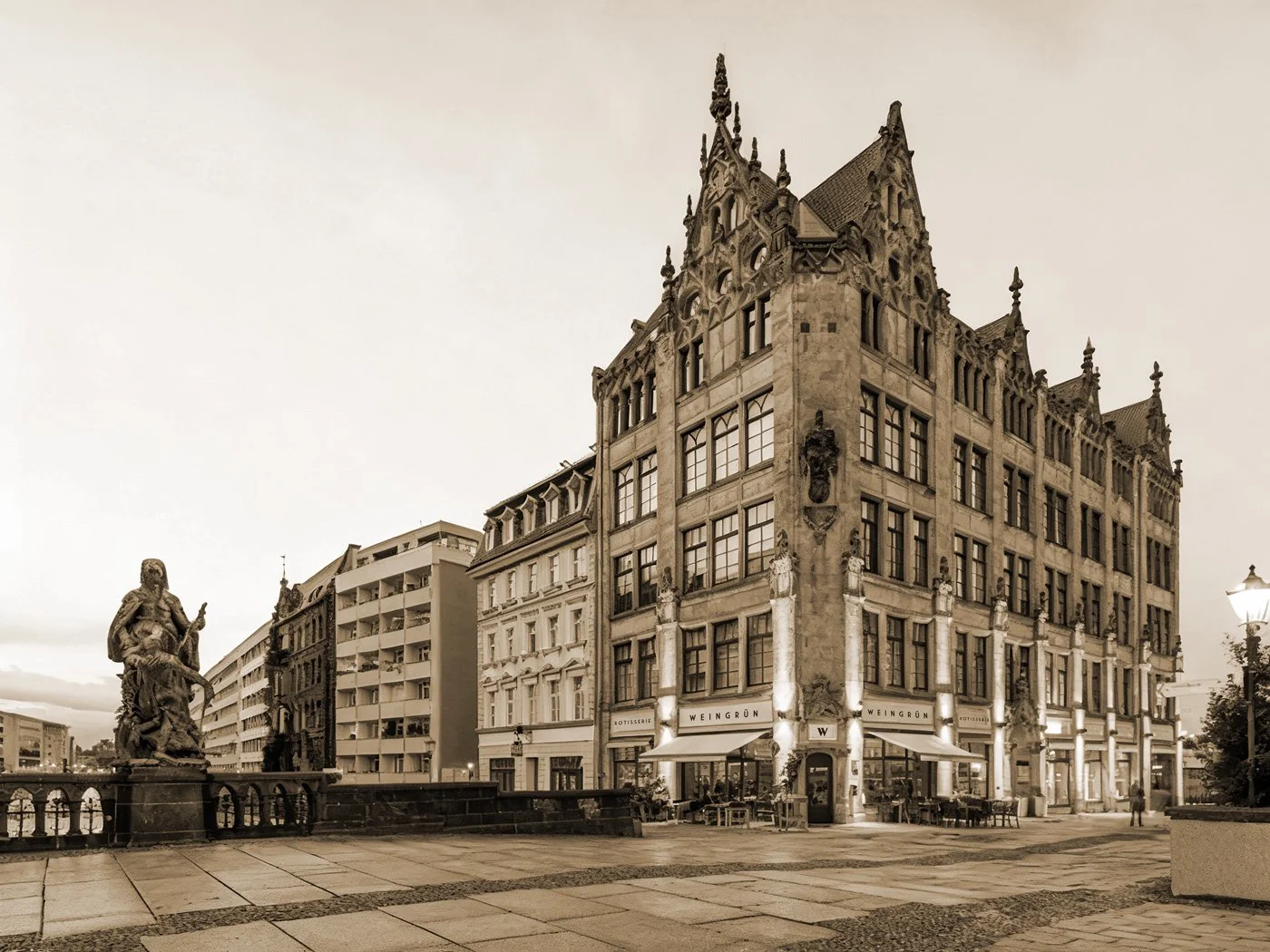
The building at Gertraudenstraße 10-12 in Berlin's Mitte district is a remarkable testament to urban architecture and history. This is due to both its design and its varied uses. Built at the turn of the century and preserved despite the difficult circumstances surrounding the war and urban development, it now marks a milestone in the historic district around Gertraudenbrücke and the former site of the medieval town of Cölln.
Architecture & Building History
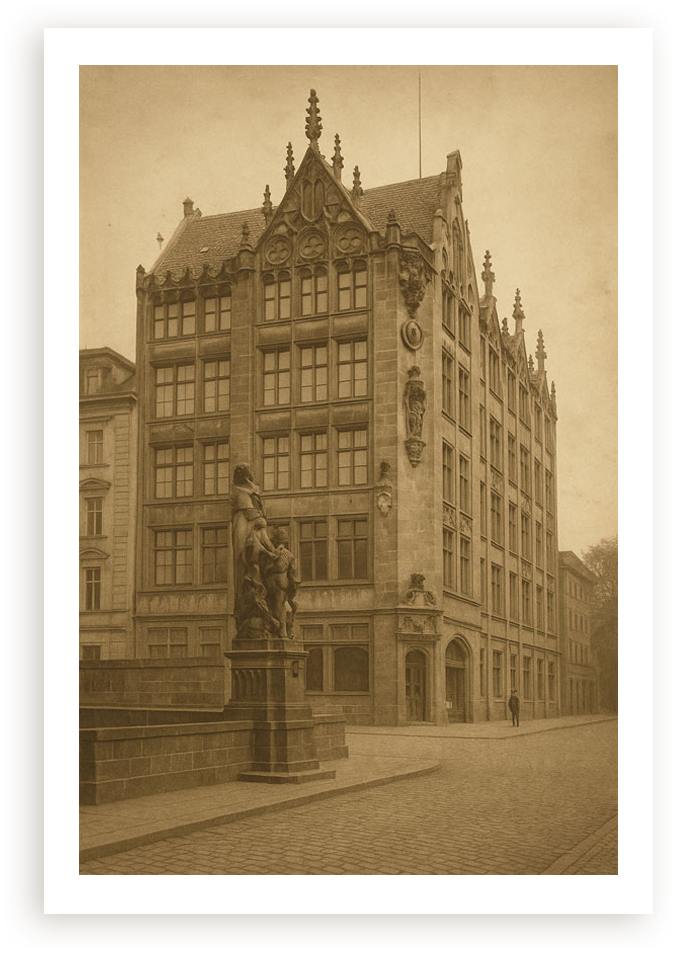
The building was constructed between 1894 and 1898 by architects Max Jacob and Georg Roensch in the Neo-Gothic style. Berlin History
It was originally planned for the gold and jewelry dealer Wilhelm Müller. The ground floor featured retail spaces, while the upper floors contained offices and residential units.
The vertically strongly structured facade design is striking, featuring sandstone, ornamented gables, and a corner that faces the Gertraudenbrücke, which gives the building a distinctive urban presence.
Historical Uses
During the Imperial Era, the building housed, among other things, a toy and doll factory, a glove shop, and an instrument store.
During the GDR era, the building served, among other things, as an office building. The ground floor contained retail outlets for jewelry and handicrafts.
The building survived World War II relatively unscathed, which is a rarity in this part of the city.
Monument Status & District Context
The building is located within the "Gertraudenstraße / Friedrichsgracht" monument area. It is considered the last remaining large commercial building of its kind on Gertraudenstraße.
The street itself was named around 1750 after Saint Gertrude of Nivelles.
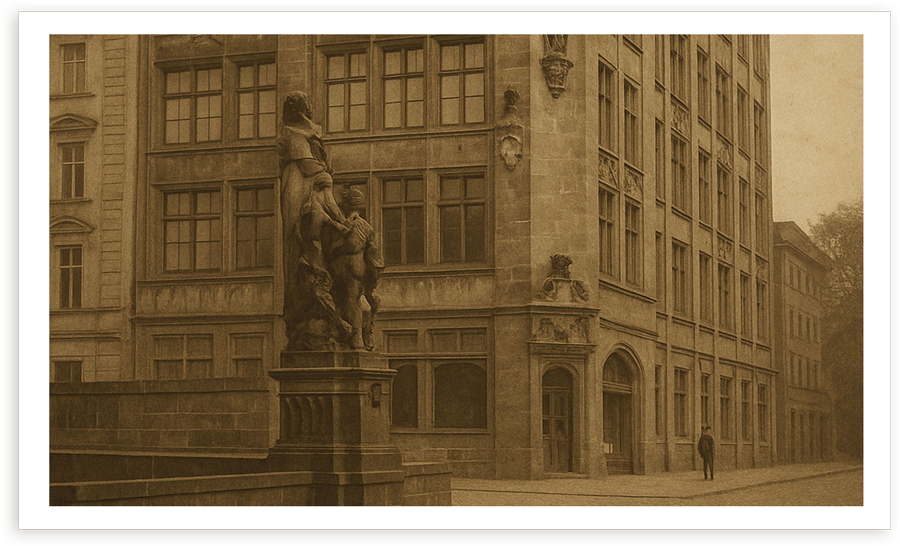
Due to its location near the original city center of Cölln and the Gertraudenbrücke ("Berlin's Oldest Bridge"), the building still conveys elements of the city's origin and development.
Today & Significance for Our Establishment
This building offers a unique combination of historic vaults, a magnificent facade, and a central location in Berlin-Mitte for its current use. It tells a story of representation, change, renunciation, and preservation, while also providing the setting for Rotisserie Weingrün, which blends historical ambiance with contemporary cuisine.